Lean Body Mass Calculator
Estimate your lean body mass — your fat-free weight — using the Boer formula. A key number for protein targets and muscle tracking.
Lean body mass
57.1 kg
82% of your body weight is lean tissue.
Lean mass
57.1
Est. fat mass
12.9
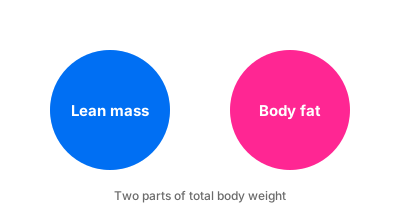
What lean body mass means
Lean body mass is your total weight minus fat mass. It includes skeletal muscle, organs, bones, connective tissue, blood, and water. Because muscle and organs are metabolically active, a higher LBM means you burn more calories at rest. This is why two people at the same weight can have very different energy needs.
How LBM affects metabolism
Muscle tissue is metabolically expensive. Each kilogram of lean mass adds roughly 15–25 kcal to your resting metabolic rate, while fat tissue adds less than 5 kcal/kg. When you lose weight, preserving LBM keeps your metabolism from slowing too much. When you gain muscle, your daily calorie budget rises naturally.
LBM vs muscle mass
Muscle mass is only one component of LBM. Bone mineral, organs, and body water also count. That means a high LBM does not guarantee a high muscle mass, and a low LBM does not necessarily mean low muscle. Use body fat percentage alongside LBM for a clearer body-composition picture. Check the body fat calculator to pair with these numbers.
How to increase LBM
Building lean mass requires three things: mechanical tension from resistance training, sufficient protein (1.6–2.2 g per kg of body weight for most active adults), and a small calorie surplus for growth. Track your protein using the protein calculator and your calories with the macro calculator. Prioritise compound lifts, progressive overload, and recovery.
LBM for protein calculations
Coaches often set protein relative to LBM rather than total weight, especially for people with higher body fat. For example, 1.8 g per kg of LBM is a common target for those in a deficit. Our protein calculator uses body weight by default, but you can adjust your target based on your LBM from this calculator.
LBM vs body fat percentage
Body fat percentage tells you what portion of your weight is fat; LBM tells you what the rest weighs. Together they show body composition more clearly than weight alone. An 80 kg person with 15% body fat has 12 kg of fat and 68 kg of LBM — a much more useful profile than simply weighing 80 kg.
LBM common questions
You can use LBM to estimate healthy weight ranges, set protein targets, and track muscle changes during a cut or bulk. It is especially valuable for lifters, athletes, and anyone who does not want the scale to hide muscle loss.
Sources and further reading
These independent, authoritative sources inform the methods used on this page.
Frequently asked questions
What is lean body mass?
Lean body mass (LBM) is everything in your body that isn't fat — muscle, bone, organs, water, and connective tissue. It's a key reference point for setting protein needs and tracking muscle during weight changes.
How is lean body mass calculated?
This calculator uses the Boer formula, which estimates LBM from your sex, height, and weight. It's one of the most widely used equations and works well for the general population.
Why does lean body mass matter?
LBM drives your metabolism — more lean mass means a higher resting calorie burn. Preserving it during weight loss keeps your metabolism strong and your body looking toned rather than 'skinny fat'.
How can I increase lean body mass?
Resistance training combined with adequate protein (1.6–2.2 g/kg) and a slight calorie surplus is the proven recipe for building lean mass over time.
How does LBM affect metabolism?
Lean tissue burns about 15–25 kcal per kg per day at rest, while fat tissue burns less than 5 kcal/kg. More LBM means a higher BMR, which helps you burn more calories around the clock.
What's the difference between LBM and muscle mass?
LBM includes muscle, bone, organs, and water. Muscle mass is just one part of LBM. You can have a high LBM from water weight or bones, but true muscle growth requires resistance training and protein.
How do I use LBM for protein calculations?
Many coaches recommend 1.6–2.2 g of protein per kg of lean body mass for those in a deficit or building muscle. Our <a href='/protein-calculator/'>protein calculator</a> can help you target the right intake.
Is LBM more accurate than BMI for body composition?
BMI is a height-to-weight ratio that cannot distinguish fat from muscle. LBM estimates your fat-free tissue directly, so it is far more useful for athletes, muscular individuals, or anyone tracking body composition changes.
How can I increase LBM naturally?
Progressive resistance training, adequate protein, and a slight calorie surplus build LBM over months. Recovery and sleep are also essential. Avoid extreme deficits that force the body to burn muscle for energy.
What is a healthy lean body mass percentage?
A healthy LBM is typically 70–85% of total body weight for men and 70–77% for women. Athletes often sit at the upper end. Use the <a href='/body-fat-calculator/'>body fat calculator</a> alongside LBM to get a fuller picture.