Macro Calculator
Turn your daily calorie target into precise grams of protein, carbs, and fat. See exactly how many calories come from each macronutrient.
Your daily macros
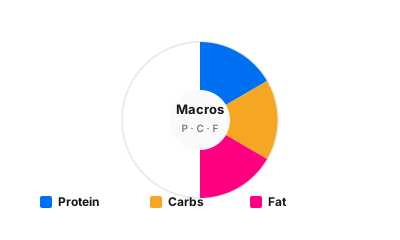
- Protein150 g · 30%
600 kcal - Carbs200 g · 40%
800 kcal - Fat67 g · 30%
600 kcal
Quick Answer: Calories Per Gram of Macros
Protein: 4 kcal/g | Carbs: 4 kcal/g | Fat: 9 kcal/g
This is the universal formula used by nutrition scientists, dietitians, and calculators worldwide. Understanding these conversions lets you calculate calories from macros instantly.
How to Calculate Calories From Macros
The formula is simple for each macronutrient:
Protein calories
Grams × 4
Example: 150g × 4 = 600 kcal
Carbs calories
Grams × 4
Example: 200g × 4 = 800 kcal
Fat calories
Grams × 9
Example: 67g × 9 = 600 kcal
Why The Numbers Matter
Protein and carbs have the same calorie density (4 kcal/g), but very different effects on your body:
| Macro | Calories/gram | Thermic effect | Satiety | Muscle impact |
|---|---|---|---|---|
| Protein | 4 kcal | Highest (20-30%) | Highest | Essential for muscle |
| Carbs | 4 kcal | Low (5-10%) | Moderate | Glycogen storage |
| Fat | 9 kcal | Low (0-3%) | Moderate | Hormone production |
This is why you can eat more protein and carbs by weight than fat while consuming fewer calories.
Macronutrient Calorie Chart
Common amounts and their calorie values:
| Protein (g) | Calories | Carbs (g) | Calories | Fat (g) | Calories |
|---|---|---|---|---|---|
| 25g | 100 kcal | 25g | 100 kcal | 10g | 90 kcal |
| 50g | 200 kcal | 50g | 200 kcal | 20g | 180 kcal |
| 100g | 400 kcal | 100g | 400 kcal | 30g | 270 kcal |
| 150g | 600 kcal | 150g | 600 kcal | 50g | 450 kcal |
| 200g | 800 kcal | 200g | 800 kcal | 70g | 630 kcal |
Choosing Your Macro Split
Different splits serve different goals:
- Balanced (30P/40C/30F): Works for most people maintaining or making small changes
- High Protein (40P/35C/25F): Ideal for fat loss — preserves muscle while keeping you full
- Low Carb (35P/25C/40F): For those who prefer lower-carb diets or want steadier energy
- Keto (25P/5C/70F): Very low carb, high fat for ketosis adaptation
- Low Fat (30P/55C/15F): Higher carb intake, less fat — good for endurance athletes
Protein Priority Strategy
Regardless of your split, always prioritize protein:
- Set your protein target using our protein calculator
- Use the meal calorie calculator to split macros across meals if you eat several times per day
- Adjust fats and carbs around your activity and preferences
Calories From Protein Percentage
On a typical 2000-calorie plan:
| Protein % | Grams | Calories from protein | Remaining for C/F |
|---|---|---|---|
| 15% | 75g | 300 kcal | 1700 kcal |
| 25% | 125g | 500 kcal | 1500 kcal |
| 30% | 150g | 600 kcal | 1400 kcal |
| 35% | 175g | 700 kcal | 1300 kcal |
| 40% | 200g | 800 kcal | 1200 kcal |
Real-World Examples
2000-calorie day with 30% protein:
- Breakfast: 3 eggs (18g = 72 kcal) + 200g Greek yogurt (20g = 80 kcal) = 172 kcal, 38g
- Lunch: 150g chicken (30g = 120 kcal) + 100g quinoa = 420 kcal total
- Dinner: 150g salmon (35g = 140 kcal) + vegetables = 400 kcal total
- Snacks: Protein shake (25g = 100 kcal) = 225 kcal remaining
Continue Reading
- Protein Calculator — Find your exact protein target
- Protein Guide — Complete protein reference
- Macro Guide — Everything about macro splits
Sources and further reading
These independent, authoritative sources inform the methods used on this page.
Frequently asked questions
What are macros?
Macronutrients — protein, carbohydrates, and fat — are the three nutrients that provide calories. Protein and carbs supply 4 calories per gram; fat supplies 9. Tracking macros gives you control over body composition, not just weight.
What is the best macro split?
There is no single best split. A balanced 30/40/30 (protein/carbs/fat) works for most people. Higher protein supports muscle retention, while lower-carb or keto splits suit some individuals. Choose what you can sustain.
How much protein should I eat?
Aim for 1.2–2.0 g of protein per kilogram of body weight per day. The higher end helps preserve muscle during weight loss and supports muscle growth during a surplus.
Do I need to hit my macros exactly?
Getting within about 5–10 grams of each target is plenty for great results. Consistency over weeks matters far more than precision on any single day.
How many calories in 1 gram of protein?
Protein provides exactly 4 calories per gram. This is a universal scientific measurement. One gram of protein = 4 kcal.
How many calories in 1 gram of carbs?
Carbohydrates provide exactly 4 calories per gram. Like protein, carbs are 4 kcal/g regardless of source.
How many calories in 1 gram of fat?
Fat provides 9 calories per gram — more than double protein or carbs. One gram of fat = 9 kcal.
How to convert protein to calories?
Multiply protein grams by 4. Example: 150g protein × 4 = 600 calories. Reverse: divide calories by 4 to get grams.
Protein calorie calculator?
Our macro calculator shows calories from protein automatically. Enter your daily calories and select a split — protein grams are calculated instantly.
What is calories to protein ratio?
The ratio is always 4:1. Every gram of protein equals 4 calories. 100g protein = 400 calories. Fat is 9:1. Carbs are 4:1.
Calories per gram of macronutrients chart?
Protein: 4 kcal/g, Carbs: 4 kcal/g, Fat: 9 kcal/g. This is why high-fat foods are more calorie-dense and why protein feels filling at fewer calories.
How to calculate calories from macros?
Protein calories = grams × 4. Carb calories = grams × 4. Fat calories = grams × 9. Add them together for total calories.